


A Comprehensive Guide on the Dimensions of Greeting Card

Have you started a stationery business cards or sell cards for digital artwork? And confused about choosing the right dimensions of greeting card? Worry not, because we are here to provide you with a complete guide. Whether you sell birthday, holiday, or thank you cards, explore the sizes of these cards in detail here to avoid confusion:
Why Do Greeting Card Dimensions Matter?
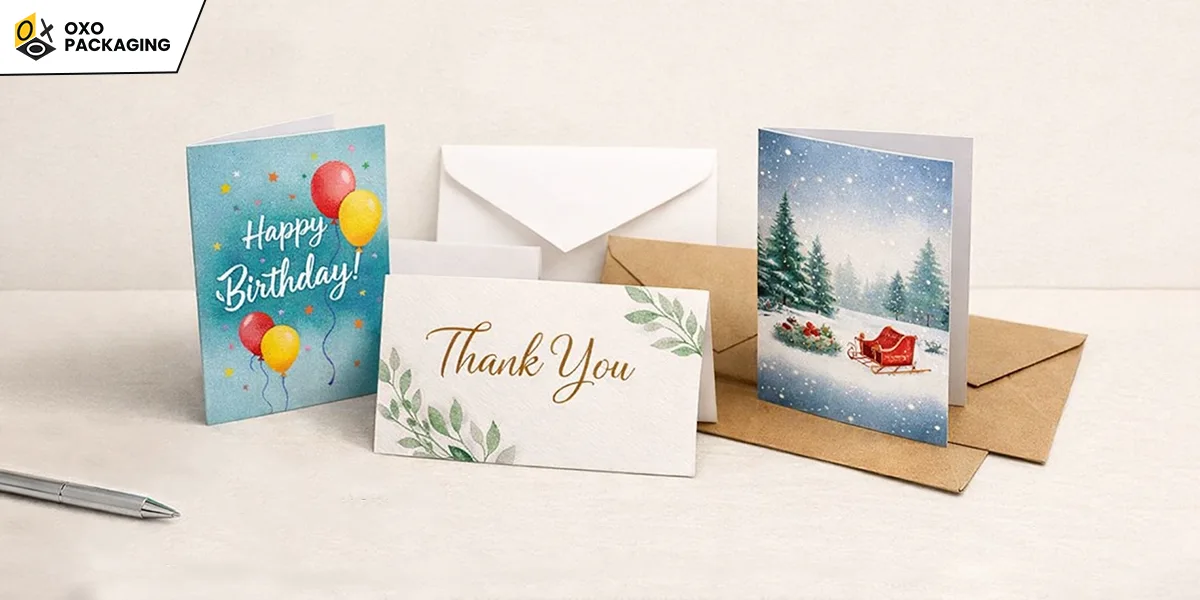
Before jumping right into the sizes of greeting cards, first explore why knowing their dimensions is important. This is because the right dimensions of a greeting card ensure cost-effective mailing, professional appearance, and proper design.
Above all, a regular greeting card size fits standard envelopes to avoid extra postage fees. The dimensions of a greeting card directly impact the card’s visual appeal, space for messaging, and production. In addition to it, the size of a standard greeting card influences how the recipient perceives your message.
How Greeting Card Size Affects Printing and Shipping
Greeting card dimensions influence printing costs, paper consumption, packaging requirements, and shipping rates. Standard sizes are generally easier to produce in bulk because printers can arrange multiple cards efficiently on a single sheet. This helps stationery brands reduce paper waste and maintain consistent quality.
Oversized, square, unusually shaped, or unusually thick cards may require special envelopes and additional postage. Before selecting a card size, measure the finished card and envelope together, including any embellishments, inserts, or protective sleeves. This is particularly important for businesses selling greeting cards online.
What Size is a Greeting Card?
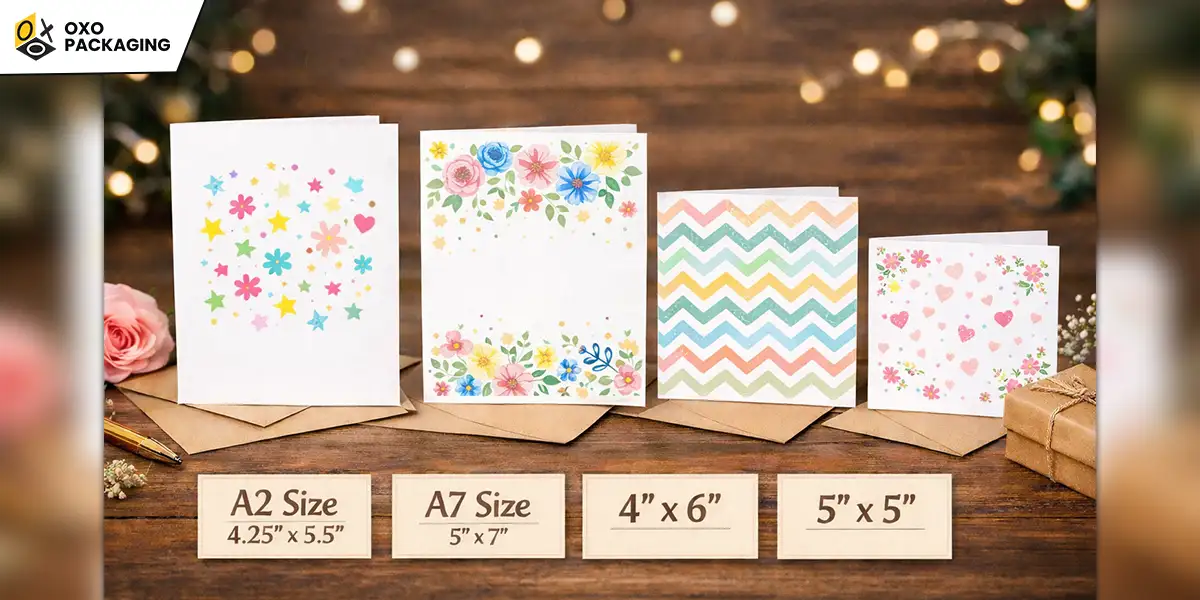
Standard greeting card sizes vary. But popular options include the versatile A2 (4.25" x 5.5"), the common A7 (5" x 7"), and smaller or square formats like 4" x 6" or 5" x 5". A greeting card has specific dimensions depending on whether it is flat or folded and its intended use, from thank-you notes to formal invitations. Here are common greeting card sizes:
Standard Greeting Card Size in cm
Greeting card dimensions depend on the regional paper-size system and the finished format. In the United States, A2 and A7 commonly refer to commercial envelope and card formats. In contrast, A5 and A6 are ISO paper sizes used internationally. These naming systems are different, so always check the actual measurements before ordering printed cards.
|
Format |
Dimensions |
|
A5 |
14.8×21 cm |
|
A6 |
10.5×14.8 cm |
|
A7 |
7.4×10.5 cm |
Standard Greeting Card Size in Inches
Standard greeting card sizes vary. But the most common are the A2 (4.25" x 5.5") and the A7 (5" x 7"), often used for more formal or special occasions, both measured as folded cards. Other popular sizes include:
|
Format |
Dimensions |
|
A2 |
4.25" x 5.5" |
|
A6 |
4.5" x 6.25" |
|
A7 |
5" x 7" |
|
A9 |
5.5" x 8.5" |
Standard Greeting Card Size in mm
Standard greeting card sizes in mm commonly include A6, A5, 148 × 210 mm, and the popular 5" x 7". Other popular options include:
|
Format |
Dimensions |
|
A7 |
127 x 178 mm |
|
A6 |
105 x 148 mm |
|
A5 |
148 x 210 mm |
|
Small Square |
100 x 100 mm |
|
Large Square |
150 x 150 mm |
|
DL |
99 x 210 mm |
|
A2 |
108 x 140 mm |
Standard Birthday Card Size
A 5 × 7-inch birthday card offers enough room for photographs, colorful illustrations, and personalized messages. Smaller A2 cards work well for simple greetings, while square cards help brands create distinctive designs. If your birthday cards include foil stamping, raised lettering, ribbons, or other decorative features, allow sufficient space for these additions during the design stage.
|
Format |
Dimensions |
|
A7 |
(5" x 7") |
|
A6 |
(4.5" x 6.25") |
|
A2 |
(4.25" x 5.5") |
|
Square |
6" x 6" |
Standard Holiday Card Size
The most standard holiday card sizes are 5" x 7" (A7) for a classic folded card and 4" x 6" (A6) for a slightly smaller, postcard-style option. These sizes balance display appeal with mailing practicality, offering ample space for photos and messages while fitting standard envelopes and postage, such as:
|
Format |
Dimensions |
|
A7 |
5" x 7" |
|
A2 |
4.25" x 5.5" |
|
Square |
5" x 5" |
For holiday cards, consider how photographs, family names, seasonal artwork, and printed messages will fit within the available space. If you plan to send cards in bulk, compare the cost of standard rectangular formats with square cards, which may be subject to different postal pricing rules
Standard Greeting Card Envelope Size
|
Format |
Dimensions |
|
A2 |
4 3/8" x 5 3/4" |
|
A6 |
4 3/4" x 6 1/2" |
|
A7 |
5 1/4" x 7 1/4" |
|
A9 |
5 3/4" x 8 3/4" |
Greeting card envelope sizes vary, but common standards are the A2 (4 3/8" x 5 3/4") for smaller notes and the popular A7 (5 1/4" x 7 1/4") for standard 5"x7" cards, ensuring the envelope is slightly larger than the card for easy insertion. Other frequent sizes include:
How to Choose the Right Greeting Card Envelope
Choose an envelope based on the card's finished dimensions, thickness, and orientation. A folded card must fit comfortably without bending its corners or damaging its edges. Cards with inserts, layered paper, or embellishments may require a deeper envelope than a standard flat card.
Thank You Card Size Standard
Standard thank-you cards have a wide range of sizes. But popular options include the versatile A2 (4.25" x 5.5"), often used for everyday notes, while other folded options are:
|
Format |
Dimensions |
|
A2 |
4.25" x 5.5" |
|
A6 |
4.5" x 6.25" |
|
A7 |
5" x 7" |
|
Flat |
4" x 6" |
A2 thank-you cards are suitable for handwritten messages, customer appreciation notes, and personal stationery. Businesses can also use branded thank-you cards in product orders to encourage repeat purchases and strengthen customer relationships. A 4 × 6-inch flat card is a practical choice when you need a simple printed message without a fold.
Standard Note Card Dimensions
There isn't one single "standard," but common note card sizes include the popular A2 (4.25" x 5.5") for general use and thank-you notes, the study-friendly 3" x 5" index card, and the larger A6 (4.625" x 6.25") The best size depends on the card's purpose, from quick reminders to formal correspondence such as:
|
Dimensions |
Uses |
|
3" x 5" |
Classic index card size, great for studying or quick notes |
|
A2 (4.25" x 5.5"): |
A versatile, popular size for personal stationery, thank-you notes, and small invites. |
|
4" x 6" |
Good for recipe cards or event announcements. |
|
A6 (4.625" x 6.25") |
Ideal for holiday cards and event invitations. |
|
A7 (5.125" x 7") |
Used for larger invitations, weddings, and formal correspondence.
|
Flat vs. Folded Greeting Card Dimensions
Flat greeting cards are printed on a single panel and do not require folding. They work well for postcards, announcements, promotional messages, and minimalist designs. Folded greeting cards open to reveal an interior panel for longer messages, illustrations, or personalized notes.
For a folded card measuring 5 × 7 inches when closed, the unfolded sheet is approximately 10 × 7 inches before accounting for bleed and finishing allowances. The fold runs along the dimension that doubles. Confirm the printer's required layout and orientation before preparing the artwork.
How to Choose the Best Greeting Card Size for Your Business
Selecting the right greeting card size depends on your target audience, design, production budget, and delivery method. Use the following considerations to make an informed decision:
- Define the purpose:
Choose a compact card for short messages or a larger format for photographs, invitations, and detailed artwork.
- Match the envelope:
Confirm that the finished card fits the intended envelope without bending or excessive movement.
- Consider production costs:
Compare cardstock usage, printing efficiency, cutting requirements, and minimum order quantities.
- Check the paper thickness:
Heavier cardstock can improve rigidity but may increase shipping weight and affect folding.
- Prepare print-ready artwork:
Follow the supplier's bleed, trim, fold, and safe-area specifications.
- Test a sample:
Review the printed colors, dimensions, fold alignment, and envelope fit before approving a large order.
To Sum Up!
If you are seeking a size guide for creating your greeting cards, birthday cards, holiday cards, or other envelopes, consider the above-mentioned sizes. Choose the right sizes, keeping in mind your paper thickness, finish, and printer compatibility. You can also contact a reliable custom packaging company, OXO Packaging, to get well-sized cards that complement your brand’s needs!
The most typical greeting card size in the US is 5x7 inches (A7). Other common sizes include smaller A2 (4.25x5.5 inches) for general use.
The most common standard card size for playing cards and trading cards is 2.5 x 3.5 inches (63.5 x 88.9 mm).
Standard greeting card dimensions typically feature a folded size of 5×7 inches (A7), 4.25×5.5 inches (A2), or 4.5×6.25 inches (A6).
Birthday card dimensions vary, but the most common sizes are the popular A2 (4.25" x 5.5"), the larger A7 (5" x 7"), and square cards like 5" x 5".




 Let's Call